

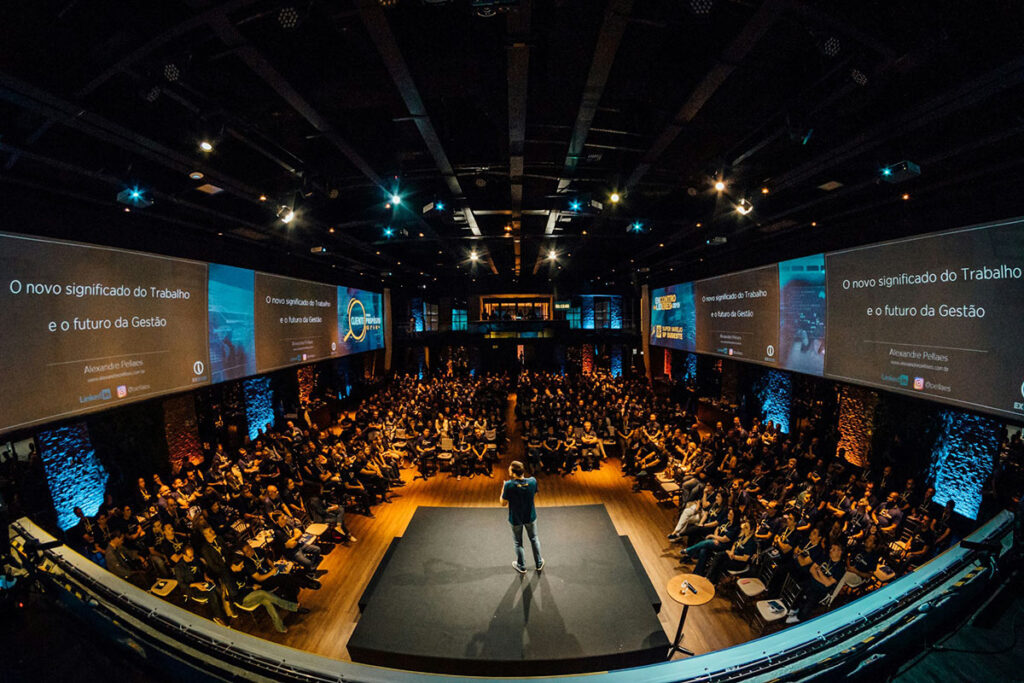
Planning an event is a big deal. You’ve got the speaker lineup to lock down, catering to confirm, sound and camera to test, invitations to send.
But people expect more than a good program. They expect convenient parking, clear directions for moving about, and enough space to do so. The tragic crowd disasters at Travis Scott’s Astroworld festival in 2021 and Seoul’s Halloween celebrations in 2022 show why this matters.
Accidents like these, according to crowd scientist Keith Still, typically involve insufficient preparation, lack of staff training, lack of wayfinding, poor signage, and people-flow problems. These characteristics highlight the need for thoughtful event design.
Here’s how to get it right.
Start With the Guest Journey
The guest journey is the complete path someone takes from arrival to departure. Start by mapping it before you decide where the furniture or signage goes.
Think about the sequence:
Parking – entrance – security – registration – seating – main event – food and networking – restrooms – exit
This map can expose problems in your guest journey before they become real bottlenecks.
Take a large event like CES 2025. The world’s largest annual technology trade show attracted 142,465 participants and more than 4,500 exhibitors. At that scale, even a small layout problem can mar the entire event.
This is not to mean you should only be concerned about the guest journey in massive gatherings. The same principle applies whether you’re planning a conference for 500 people or a gathering for 50.
Design Signs for Easy Wayfinding
Next is the event signage design, and a good one should be as clear as it is decorative. A beautiful sign that nobody can understand from 50 feet away isn’t doing much. The key is consistency.
Let all wayfinding signs, including entrance and exit signs, directional arrows, registration signs, seating section signs, restroom signs, and emergency information, be all the same design.
More importantly, place signs where guests actually have to make decisions. The spot where the hallway splits toward the restrooms is a good example. This isn’t just common sense. It’s a booming industry. Research and Markets notes that the global wayfinding signage market could hit $4.25 billion by 2030, driven in part by the growth in large-scale public events.
But signage doesn’t automatically make a better event. The design still has to work in the real world. The best test? Walk through the venue as if you’ve never seen it before. If you’re confused about where to go, your guests probably will too.
Build Security Into the Entrance Design
Event security should be built-in as part of the guest experience from the beginning.
This means that you should plan screening areas, staff positions, queues, accessibility routes, and entry instructions at the same time you do the event layout design. People should know what to expect before they reach the screening point.
And security screening at events is very important. Even metal detectors, which were only used in airports and transport hubs, are now commonplace at big events. The 2026 Bradley 315 Music Fest in Illinois is a good example. Walk-through screening systems were used at event entrances to help manage security and prevent people from going in with prohibited items.
These systems, like the OPENGATE metal detectors, are designed to screen people and their bags as they walk through, maintaining that continuous flow.
According to GXC Inc., they’re ideal for venues requiring both robust security and an uninterrupted user experience.
But you have to do it in a way that prevents unnecessary bottlenecks. Your event can be secure without a chaotic entrance.
Don’t Overlook the Small Design Details
We live in a digital age, so it’s easy to think printed designs don’t matter. They do. Even when a lot of the process happens online, guests still interact with physical elements throughout an event. Think about concert tickets. You might buy your ticket online, but once you arrive, you may still receive a wristband or some other physical item before going in.
And it’s not just wristbands. Depending on the type of event, program cards, seating cards, name badges, menus, table numbers, schedules, and even invitations can all become part of the guest experience. Each one is a small chance to reinforce your event’s look while also being genuinely useful.
Bottom line? Don’t treat these details as afterthoughts. Design them with both function and aesthetics in mind.
Design for Different Guests
Finally, consider accessibility and different visitor needs. Accessibility in particular isn’t a nice-to-have anymore. It’s basic planning, seeing as roughly 1.3 billion people globally live with a significant disability, according to the UN.
This means that when you’re doing your event layout design, include accessible routes and easy-to-find assistance points. More importantly, when you’re designing or contracting out the wayfinding sign designs, include tactile, high-contrast visual, and audio signage.
But don’t stop there. Also consider visitors who need more guidance, such as someone with a visual impairment. Not everyone experiences spaces the same way, and thoughtful design accounts for that.
Designing an Event for Better Guest Experience: Key Points
Here’s a quick look at the key points for designing your event so it resonates better with guests.
| Key Points | Quick Takeaway |
| Plan the Guest Journey | Map the experience from parking to leaving. Identify bottlenecks before the event. |
| Make Wayfinding Easy | Use clear, consistent signage and place it where guests need to make decisions. |
| Build Security Into the Layout | Plan screening from the start. Good security shouldn’t create unnecessary congestion. |
| Pay Attention to Physical Prints | Event printed materials should be useful, attractive, and consistent with the event’s design. |
| Design for Different Guests | Include accessible routes and tactile, high-contrast, or audio cues where appropriate. |
What elements are important in an event layout?
When designing an event layout, the essentials are entrances, seating arrangement,
wayfinding signage, restrooms, and security screening. Everything else builds on top of these.
Can event signage improve the guest experience?
Absolutely. Proper event signage can lower confusion, speed up foot traffic,
and help attendees find key zones effortlessly. This means that they can be
fully involved in the event without needing constant staff assistance.
How can event organizers balance security and guest experience?
The best approach is to integrate security into the layout from the get-go.
You should also provide clear instructions and, if possible, use screening
technology designed to support efficient pedestrian flow. The security process
should be seamless and unobtrusive.
Wrapping Up
Events happen virtually every day of the week, and a guest who has a great experience at your event is far more likely to come back to the next one.
While there are a lot of things that can impact guest or attendee experience, event design and layout are top on the list. Hopefully, this guide has shown you how to do it right, from signage to seating, printed materials, backdrops, and more.
