

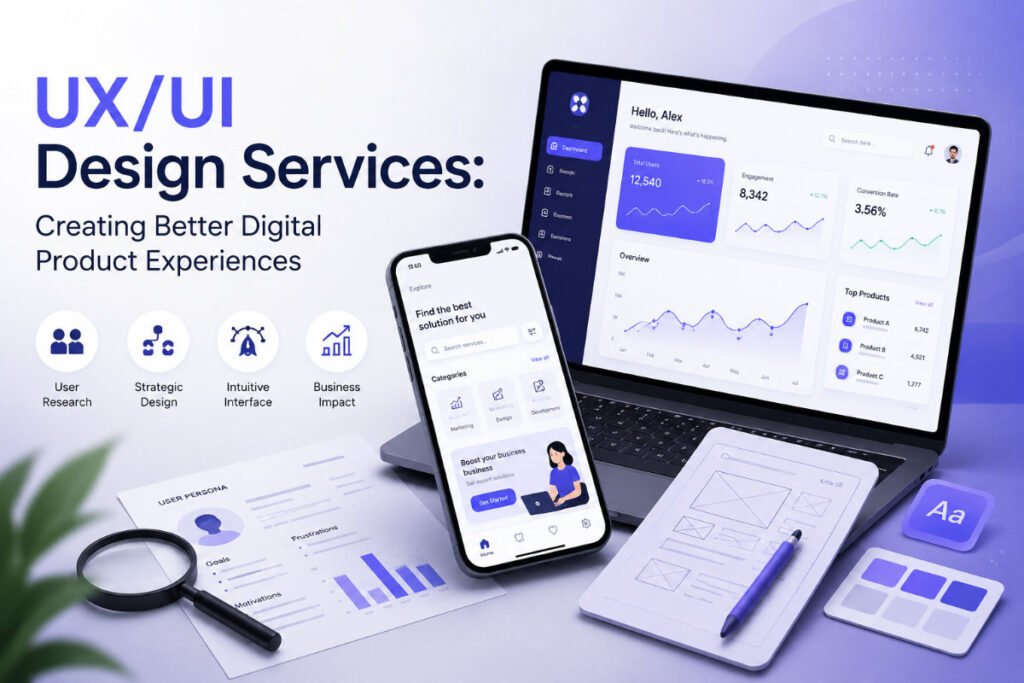
Digital products succeed when they solve real problems in ways that feel simple and intuitive. While functionality is essential, the overall user experience often determines whether people continue using a product or look for alternatives. Businesses that invest in thoughtful design are better positioned to improve customer satisfaction and long-term product performance.
Professional UX/UI design services combine user research, product strategy, interaction design, and visual design into a structured process. The goal is not only to create attractive interfaces but also to build experiences that help users achieve their objectives with minimal effort.
Starting With User Research
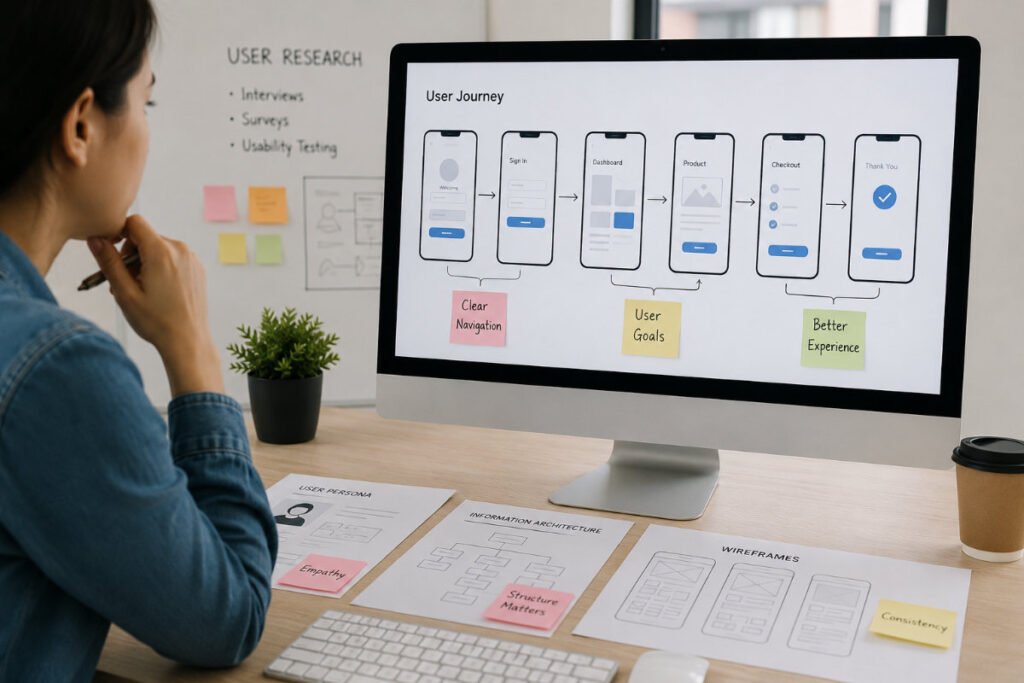
Every successful digital product begins with understanding its users. Research helps identify customer goals, common frustrations, and behavioral patterns that influence design decisions throughout the project.
Rather than relying on assumptions, product teams use these insights to prioritize functionality, improve workflows, and create experiences that address real user needs.
Designing Clear User Journeys
Users should be able to navigate a product naturally, without spending time figuring out where to click or what to do next. Well-designed user journeys remove unnecessary complexity and guide users toward meaningful outcomes.
- Simple navigation that supports key user tasks
- Logical information architecture across the product
- Consistent interaction patterns that reduce learning time
When users can accomplish their goals quickly, engagement and satisfaction naturally improve.
Balancing User Needs and Business Goals
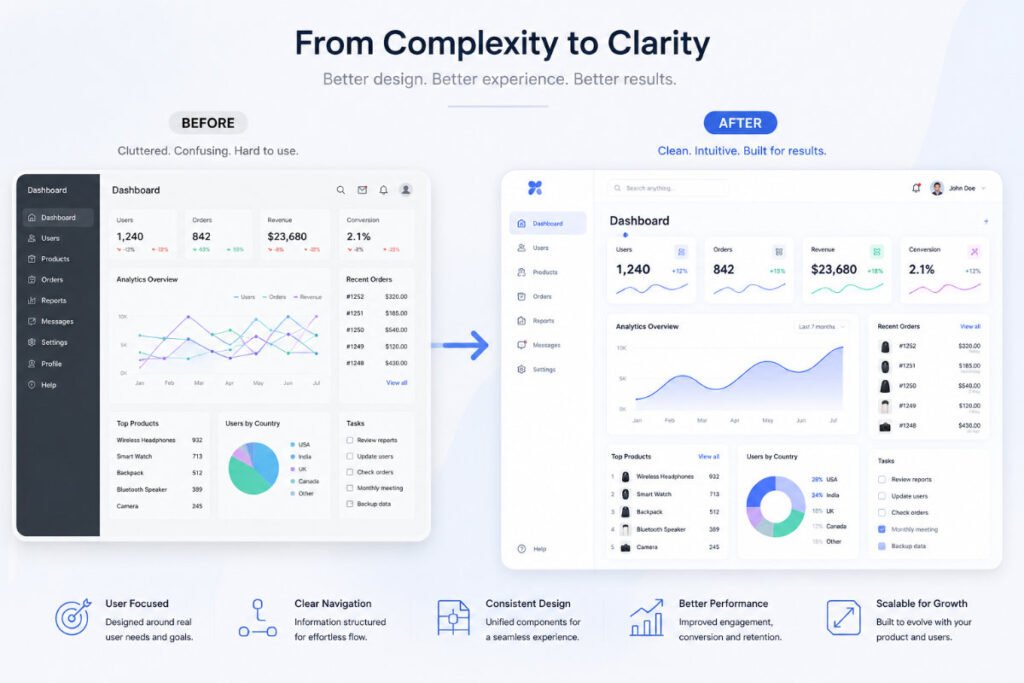
Effective UX/UI design benefits both users and businesses. While users expect efficiency and clarity, organizations focus on metrics such as conversion, retention, and customer loyalty. Strong design creates a balance between these priorities.
Every interaction should support business objectives without adding unnecessary friction to the user experience.
Creating Products That Scale
Digital products continue evolving after launch. New features, integrations, and user segments require a design approach that supports long-term growth without sacrificing consistency.
Reusable components, design systems, and scalable UX patterns help maintain a cohesive experience while allowing products to expand efficiently over time.
Improving Through Continuous Iteration

User expectations change, and successful products adapt with them. Analytics, usability testing, and customer feedback provide valuable insights that guide future improvements.
Continuous iteration allows teams to refine both UX and UI over time, ensuring that the product remains relevant, competitive, and easy to use as business requirements evolve.
Conclusion
UX/UI design services play a critical role in creating digital products that users enjoy and businesses can successfully grow. By combining research, strategy, and thoughtful interface design, organizations can build experiences that improve usability, strengthen customer relationships, and deliver lasting business value.
